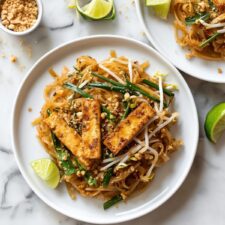
Vegan Pad Thai with Tofu
Ingredients
- 16 oz. fresh rice noodles (or 16 oz. dry, medium-width rice noodles)
- ½ of a tamarind block or ¾ cup tamarind concentrate
- ¾ cup palm sugar, finely chopped, or to taste
- ¾ cup brown sugar, or to taste
- Vegan fish sauce substitute: Mix 3 tablespoons Thai thin soy sauce, 4 tablespoons Thai fermented soybean paste (tao jiew) or 3 tablespoons miso or Korean doenjang
- 4–6 tablespoons coconut oil (or oil of choice)
- 6 garlic cloves, minced or smashed
- 2 shallots, finely chopped (optional)
- 2 cups extra-firm tofu, pressed and cut into thin strips (about ¼ to ½ inch thick and 2 to 3 inches long, or whatever size you like for easy eating
- 2 cups fresh bean sprouts
- 1 cup green onions or Chinese garlic chives, cut into 2-inch pieces
- ¼ cup preserved radish, chopped (optional)
- Crushed peanuts
- Dried Thai red chili flakes
- Sugar
- Lime wedges
- Extra bean sprouts and green onions
Steps
Step 1: Soak the Noodles
If using 16 oz. fresh rice noodles, you don’t have to soak them, but I like to for about 30 minutes in room-temperature water to help them cook even quicker when stir-frying. If using 16 oz. dry rice noodles, soak for about 1 hour, never boil or they’ll get gummy. Drain and set aside.
Step 2: Make the Sauce
If using ½ of a tamarind block, cover it in 1 cup warm water for 10 minutes to soften. Press through a fine-mesh strainer to remove the seeds and fibers, or use your hands to squeeze out the pulp. Measure out ¾ cup of the paste, or use ¾ cup jarred tamarind concentrate if that’s easier. For the traditional Thai method, which is what I do, you can use your hands to squeeze out the pulp, make a paste, and throw away the seeds and fibers.
In a small saucepan, combine ¾ cup palm sugar, ¾ cup brown sugar, ¾ cup tamarind concentrate, 2 tablespoons soy sauce, 3 tablespoons fermented soybean paste (tao jiew) or 2 tablespoons miso or Korean doenjang, and ½ cup water. Stir over medium heat until the sugars dissolve and the sauce is smooth. If you prefer a less sweet Pad Thai, start with ½ cup of each sugar and adjust to taste.
Taste and adjust the sauce to your liking. Add more tamarind for a tangier flavor, more sugar for sweetness, or a splash of soy sauce for extra saltiness. Set aside while you prep the noodles and tofu.
Step 3: Cook the Aromatics and Tofu
Work in 2 batches so your noodles don’t clump. Heat 2 to 3 tablespoons coconut oil in a large wok or cast-iron skillet over medium-high heat. Add 3 garlic cloves, minced, and 1 shallot, finely chopped if using, and stir until fragrant.
Add 2 cups extra-firm tofu, pressed and cubed. You can deep fry and make Thai Fried Tofu for the crispiest texture like I do, or pan fry it in a few tablespoons of oil until golden on all sides. If pan frying, toss the tofu in 1–2 teaspoons cornstarch first for a light, crisp coating that helps it hold up in the sauce. Tofu is also sold pre-fried at Asian markets if you want to skip the frying step entirely.
Remove the tofu from the pan and set aside. No need to wash the pan—you’ll use it again to cook the noodles next.
Step 4: Cook the Noodles
Important note: Only cook two servings of noodles at a time so they don’t get gummy from too much moisture. You will do this recipe in two batches.
Add another 2 to 3 tablespoons coconut oil if needed, then add half the noodles, about 8 ounces, and a ladleful of sauce. Keep the noodles moving quickly so they don’t stick, using tongs or two spatulas to flip and separate them. Add a splash of water if needed to loosen.
Step 5: Combine Everything
Once the noodles are tender, add the fried tofu, ½ cup green onions or garlic chives cut into 2-inch pieces, 1 cup fresh bean sprouts, and 2 tablespoons preserved radish if using, and another ladle of sauce if needed. Stir-fry just until everything is heated through, then remove from heat. Repeat with the second half of noodles and sauce if needed.
You might have some extra sauce left over. Store it in a jar in the fridge for up to 2–3 weeks, or freeze it for up to 3 months. Just give it a stir before using again.
Step 6: Serve with Toppings
Serve your Vegan Pad Thai with Tofu right away while it’s hot. Top with crushed peanuts, lime wedges, Thai red chili flakes, sugar, and extra bean sprouts and green onions for freshness and crunch.
Source: thaifoodie